Discover the defining stories of the FIFA World Cup 2026, from Lionel Messi’s farewell and Spain’s triumph to Erling Haaland’s rise and Cape Verde’s historic journey.
how-will-2026-fifa-world-cup-be-remembered
How Will the 2026 FIFA World Cup Be Remembered?
Every FIFA World Cup leaves a lasting mark on football history. Yet when we look back years later, entire tournaments are often reduced to a single image, a defining player, or one unforgettable story. The 2022 FIFA World Cup is remembered as the tournament Lionel Messi finally conquered. The 2018 World Cup became Kylian Mbappé’s grand arrival on the world stage. The 2014 tournament is forever linked to Germany’s astonishing 7-1 demolition of Brazil. Each World Cup eventually finds its identity.
The FIFA World Cup 2026, hosted across the United States, Canada, and Mexico, presents a fascinating challenge. It was the largest World Cup ever staged, featuring 48 teams and an unprecedented number of matches. It delivered emotional farewells, emerging superstars, tactical masterclasses, shocking upsets, and memorable underdog stories. Yet unlike some previous tournaments, there is no single moment that immediately defines everything.
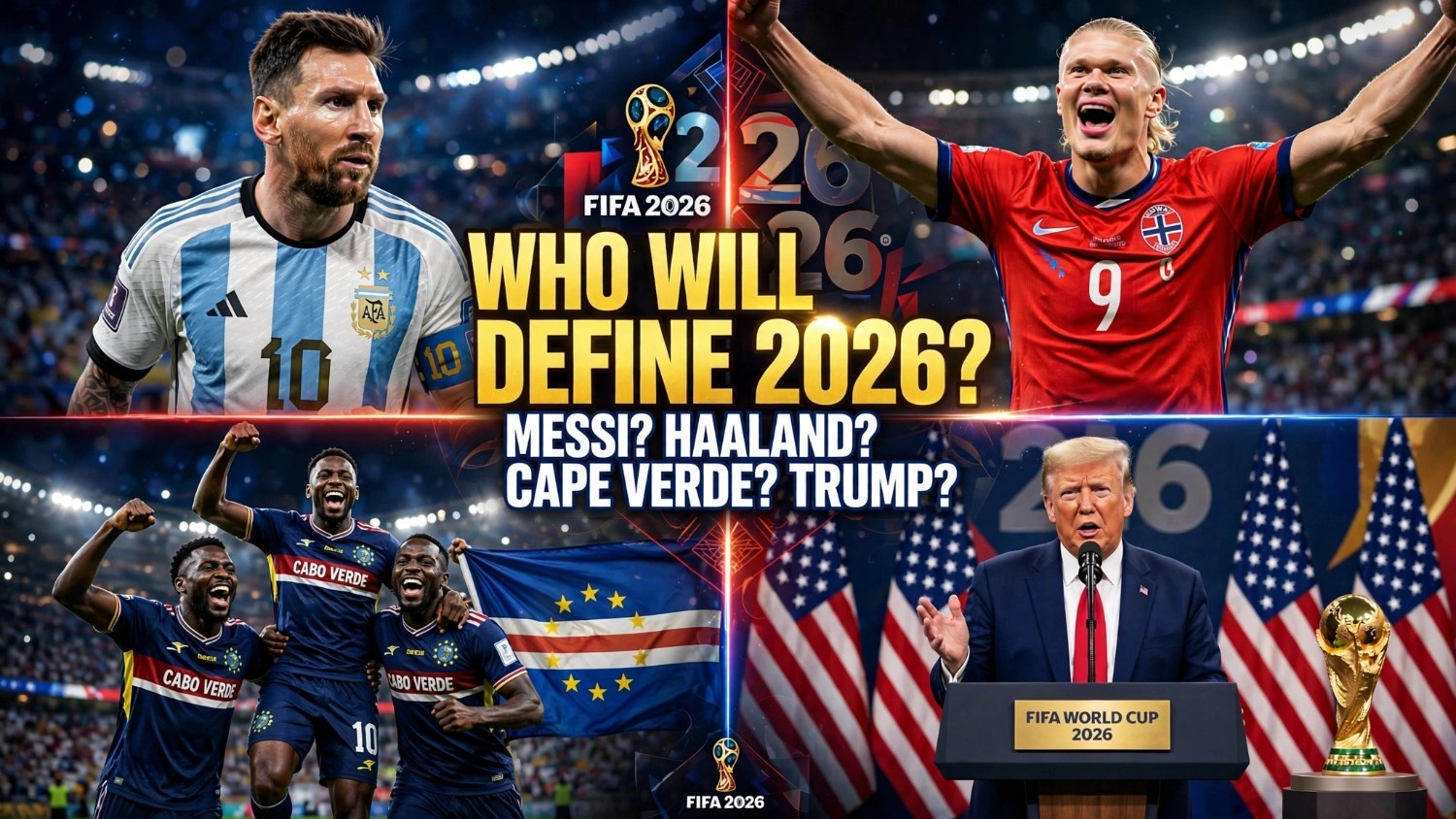
So when football fans gather twenty years from now and discuss the 2026 FIFA World Cup, what will they remember most? Will it be Lionel Messi’s final dance? Spain’s tactical domination? Erling Haaland’s emergence as an international icon? Cape Verde’s fairy-tale run? Or the historic transformation of the World Cup itself?
Lionel Messi’s Final Chapter
If one storyline carried the emotional weight of the entire tournament, it was Lionel Messi’s final World Cup appearance. After leading Argentina to glory in Qatar 2022, many believed his international journey was complete. Yet Messi returned one last time, determined to help Argentina defend their crown.
At 39 years old, Messi was no longer the explosive player who dazzled defenders in his youth, but his intelligence, vision, and ability to influence matches remained extraordinary. Throughout the tournament, he produced moments of brilliance that reminded the world why he is regarded as one of the greatest footballers of all time.
Argentina once again reached the final, creating the possibility of a perfect ending. Although Spain ultimately lifted the trophy after an intense battle, Messi’s farewell became one of the defining narratives of the competition. Future generations may not remember every result from the tournament, but they will remember that 2026 marked the end of Messi’s World Cup career.
For millions of fans, that alone may become the tournament’s lasting legacy.
Spain’s Quiet Dominance
While Messi captured headlines, Spain captured history. Their triumph in 2026 was not built around a single superstar but around collective excellence. Spain played some of the most controlled and intelligent football seen in modern international competition.
Their possession game frustrated opponents. Their pressing system suffocated attacks before they developed. Their defenders rarely made mistakes, while their midfield dictated the rhythm of matches with remarkable composure.
Unlike previous champions who relied heavily on one iconic figure, Spain succeeded because every player understood their role perfectly. The result was a team that appeared almost impossible to break down.
The final against Argentina perfectly summarized Spain’s tournament. It was not a chaotic thriller or a high-scoring spectacle. Instead, it was a display of discipline, patience, and tactical superiority. Spain’s victory demonstrated that teamwork and structure can still overcome individual brilliance.
Years from now, football analysts may point to Spain’s 2026 campaign as one of the greatest examples of modern tactical football.
Erling Haaland’s Arrival on the Global Stage
For years, Erling Haaland dominated club football. His goal-scoring record, physical power, and relentless consistency made him one of the most feared strikers in the world. Yet he lacked one thing: a defining World Cup performance.
The 2026 tournament changed that.
Leading Norway back to football’s biggest stage, Haaland embraced the pressure and delivered performances that captured global attention. His goals inspired Norway’s impressive run and proved that he could shine under the brightest spotlight.
More importantly, Haaland emerged as one of the faces of football’s future. With Messi nearing retirement and Cristiano Ronaldo already stepping away from the international stage, football has been searching for its next global icons.
The World Cup provided Haaland with the perfect platform to take that next step. Even though Norway did not win the tournament, Haaland’s performances ensured that his name became central to conversations about football’s future.
When historians discuss the next generation of football legends, they may identify the 2026 World Cup as the moment Haaland truly arrived.
Cape Verde’s Unforgettable Fairy Tale
Every World Cup needs an underdog story. In 2026, that story belonged to Cape Verde.
Before the tournament began, few expected the small African nation to make a significant impact. However, football has always been capable of producing miracles, and Cape Verde became the tournament’s most inspiring surprise.
Their players competed with courage, determination, and belief. Match after match, they exceeded expectations and earned admiration from supporters around the world. Their success demonstrated that football remains a sport where passion and teamwork can challenge even the strongest opponents.
Cape Verde’s run reminded fans why the World Cup is special. It is not simply a competition for traditional powers. It is a global celebration where dreams can become reality.
Long after trophies are forgotten, the memory of Cape Verde’s remarkable journey may continue inspiring smaller nations across the football world.
The First 48-Team World Cup
Perhaps the most significant legacy of the 2026 tournament has nothing to do with individual players or specific matches.
For the first time in history, 48 nations competed in a FIFA World Cup.
When FIFA announced the expansion, critics questioned whether the tournament would lose quality. Many feared that increasing the number of teams would create unbalanced matches and dilute the prestige of the competition.
Instead, the expanded format largely succeeded.
More nations experienced the excitement of the World Cup. New football cultures were introduced to global audiences. Emerging teams gained valuable experience on the biggest stage.
The larger tournament also created opportunities for unforgettable stories, including Cape Verde’s success and several other surprise performances. Rather than weakening the competition, expansion helped showcase football’s global growth.
Decades from now, historians may view the 2026 World Cup as the event that transformed international football forever.
Football in a Changing World
The 2026 FIFA World Cup unfolded against a complex political and cultural backdrop. As one of the largest sporting events ever hosted across North America, the tournament attracted global attention beyond football itself.
Political debates, immigration discussions, and international diplomacy frequently intersected with the event. Yet once matches began, football once again demonstrated its unique power to unite people.
Fans traveled from every continent. Stadiums were filled with color, passion, and celebration. Rival supporters shared unforgettable experiences despite cultural and political differences.
This ability to bring people together remains one of football’s greatest strengths. The 2026 World Cup reminded the world that sport can create connections that transcend borders and divisions.
The Rise of a New Generation
Another defining aspect of the tournament was the emergence of young talent.
Every World Cup introduces future stars, and 2026 was no exception. Young players displayed confidence, creativity, and fearlessness against some of the best teams in the world.
Several teenagers and rising stars announced themselves as future Ballon d’Or contenders. Others became national heroes almost overnight.
As Messi’s generation prepared to leave the stage, a new generation stepped forward. The transition was symbolic. Football was entering a new era, and the World Cup served as the bridge between past and future.
Twenty years from now, many fans may look back at 2026 and realize it was the first glimpse of football’s next great generation.
Technology Becomes Part of the Game
Unlike previous tournaments where technology often dominated headlines, the 2026 World Cup showed how innovation could quietly improve football.
VAR decisions became faster and more accurate. Semi-automated offside technology reduced controversy. Advanced tracking systems provided deeper tactical insights for teams and broadcasters.
Rather than distracting from the action, technology enhanced the overall experience. Fans became more comfortable with these innovations, and they gradually became a normal part of the sport.
This subtle shift may not generate dramatic headlines, but it could become an important milestone in football’s evolution.
What Will History Remember Most?
Predicting how history remembers a World Cup is never easy. Immediate reactions often differ from long-term memories.
At the moment, several narratives compete for attention. Some fans will always associate 2026 with Lionel Messi’s farewell. Others will remember Spain’s tactical excellence. Many will focus on Haaland’s rise, Cape Verde’s miracle run, or the successful introduction of the 48-team format.
Over time, however, one or two stories usually emerge as dominant.
The strongest candidate may be Messi’s final World Cup because it connects directly to one of football’s greatest legends. Yet Spain’s achievement could also grow in significance as analysts study their remarkable style of play.
Ultimately, the answer may not be limited to a single moment. The 2026 FIFA World Cup may be remembered as a tournament of transition—a competition that celebrated football’s past while embracing its future.
The Lasting Legacy of FIFA World Cup 2026
The greatest World Cups capture more than goals and trophies. They reflect the state of football at a particular moment in time.
The 2026 FIFA World Cup represented change. It expanded the tournament to unprecedented levels. It welcomed new nations into football’s biggest celebration. It honored legends nearing the end of their careers while introducing future superstars.
It delivered unforgettable stories, emotional moments, tactical innovation, and global excitement.
Whether fans remember Messi’s goodbye, Spain’s dominance, Haaland’s breakthrough, Cape Verde’s dream run, or the first successful 48-team tournament, one thing is certain: the FIFA World Cup 2026 will occupy a unique place in football history.
Years from now, when supporters reflect on this remarkable tournament, they may realize that its true legacy was not one single moment. Instead, it was the way the competition connected football’s past, present, and future in one unforgettable summer.
The 2026 FIFA World Cup proved once again why the tournament remains the most powerful and captivating event in world football.