AI’s Biggest FIFA World Cup 2026 Star: Fake Erling Haaland Videos Go Viral
Discover how AI-generated Erling Haaland videos became one of the biggest viral stories of the FIFA World Cup 2026. Learn about deepfakes, social media trends, Viking memes, and Haaland’s growing global popularity.
ai-fake-erling-haaland-fifa-world-cup-2026
AI’s Biggest FIFA World Cup 2026 Star? Fake Erling Haaland Videos Dominate Social Media
The FIFA World Cup 2026 has produced unforgettable football moments, dramatic knockout matches, and record-breaking performances. Yet one of the tournament’s biggest stars hasn’t only been on the pitch—it has also been created by artificial intelligence.
Norway’s superstar striker Erling Haaland has continued doing what he does best during the FIFA World Cup 2026: scoring goals, entertaining fans, and becoming one of football’s most talked-about personalities.
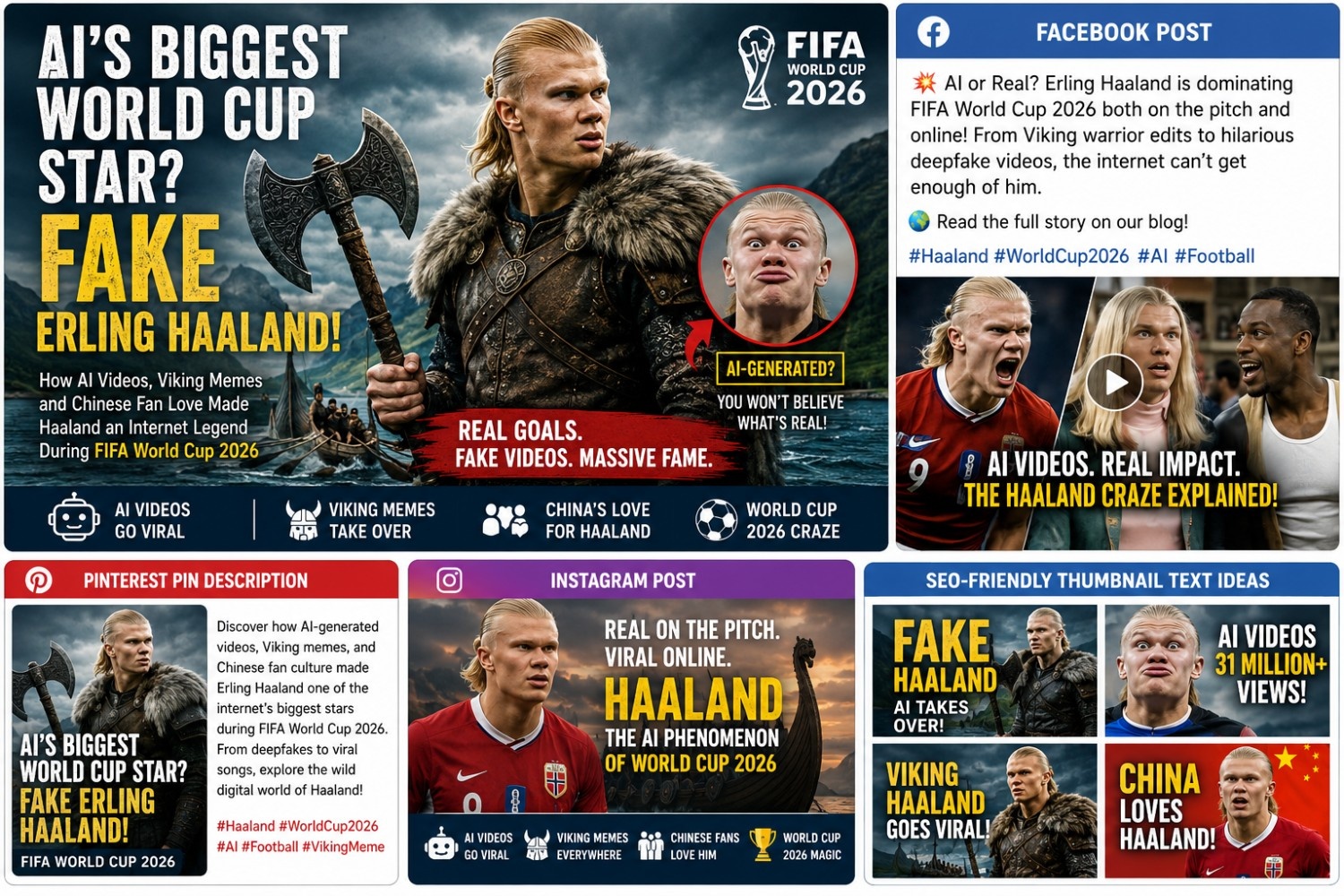
However, alongside his real performances, an entirely different version of Haaland has taken over the internet. AI-generated videos, deepfake memes, Viking edits, and humorous social media clips have spread across platforms, attracting tens of millions of views and blurring the line between reality and digital fiction.
The phenomenon has become one of the most fascinating stories of the FIFA World Cup 2026—not because of goals alone, but because artificial intelligence has transformed one footballer into a global internet icon.
Erling Haaland: A Social Media Superstar
Long before the FIFA World Cup 2026 kicked off, Haaland had built a reputation for his playful online personality.
Unlike many athletes who carefully curate every post, Haaland regularly shares humorous content featuring:
- Funny selfies
- Silly facial filters
- Light-hearted Q&A sessions
- Comedy sketches
- Self-deprecating jokes
- Behind-the-scenes moments
His relaxed style has helped him attract millions of followers worldwide.
Fans enjoy the fact that one of football’s deadliest strikers is also willing to laugh at himself, making him one of the sport’s most relatable superstars.
The Rise of AI-Generated Haaland Videos
As the FIFA World Cup 2026 progressed, AI-generated content featuring Haaland exploded across social media.
Some videos looked incredibly realistic.
One viral clip showed Haaland sitting inside a restaurant, eating casually before suddenly reacting to his own reflection.
The video appeared authentic.
Millions believed it was real.
Within days, the clip had accumulated more than 31 million views across social media.
Fact-checkers later discovered that the original footage actually featured two Chinese comedy creators. AI face-swapping technology had simply replaced the original actor’s face with Haaland’s.
Even after corrections were added, the video’s popularity continued to grow.
This highlighted one of artificial intelligence’s biggest challenges: once convincing content spreads online, correcting misinformation becomes extremely difficult.
When AI Becomes Entertainment
Not every AI-generated video was intended to deceive.
Many creators simply wanted to entertain football fans.
Throughout the FIFA World Cup 2026, countless creators used AI editing tools to imagine Haaland in humorous situations.
Examples included:
- Haaland singing
- Haaland dancing
- Haaland acting in comedy scenes
- Haaland appearing inside famous movie clips
- Haaland participating in fictional interviews
Most viewers understood these edits were jokes.
Nevertheless, the realistic quality of modern AI technology made many videos almost indistinguishable from authentic footage.
The Viral Haaland and Vinícius Júnior Collaboration
One of the tournament’s most popular fan creations imagined Haaland alongside Vinícius Júnior.
Before Norway faced Brazil in the Round of 16, creators edited scenes from the comedy movie White Chicks.
Using AI face replacement, they inserted Haaland and Vinícius into one of the film’s most memorable singing scenes.
The edits quickly spread across Instagram, TikTok, X, and Facebook.
What made the story even more entertaining was Haaland’s own reaction.
Rather than criticizing the edit, he reportedly enjoyed it and suggested recreating the scene with Vinícius in real life.
His response showed how some athletes embrace internet humor while still recognizing the difference between parody and misinformation.
The Viking Image That Inspired Millions
Perhaps the most iconic AI trend of the FIFA World Cup 2026 involved Haaland’s Viking identity.
The connection wasn’t random.
Several years earlier, celebrated photographer David Yarrow photographed Haaland standing waist-deep inside a Norwegian fjord while dressed as a Viking warrior.
Ahead of the FIFA World Cup 2026, the Norwegian national team expanded on that concept.
The squad posed together wearing Viking-inspired outfits alongside swords, shields, and a traditional longship.
The dramatic image quickly became one of the tournament’s most recognizable promotional photographs.
Fans immediately transformed it into something even larger.
AI generators created thousands of new versions featuring:
- Haaland leading Viking armies
- Massive Nordic battles
- Stormy oceans
- Mythical landscapes
- Giant warships
- Cinematic fantasy scenes
- Legendary Norse warriors
These images spread across nearly every major social media platform.
Where Creativity Meets Confusion
The Viking edits perfectly illustrate both the strengths and weaknesses of AI-generated content.
On one hand, they represent fan creativity.
On the other, many users struggle to distinguish between official promotional images and AI-generated artwork.
As image-generation technology improves, football organizations, media outlets, and supporters increasingly face questions about authenticity.
The FIFA World Cup 2026 has become one of the largest examples of how AI is reshaping sports culture.
China’s Fascination with Erling Haaland
No country has embraced Haaland’s online persona more enthusiastically than China.
After launching official accounts on Chinese social media platforms shortly before the FIFA World Cup 2026, Haaland rapidly attracted millions of followers.
Within weeks, his audience grew dramatically.
Chinese fans celebrate him in two very different ways.
The Robot Striker
On the football pitch, Haaland is often described as:
- The Nordic Cyborg
- Robot Striker
- Goal Machine
- Human Scoring Machine
These nicknames reflect his incredible consistency in front of goal.
His powerful physique, speed, and finishing ability often make him appear almost unstoppable.
“Ha Baby”
Away from football, Chinese supporters have created a completely different identity.
They affectionately call him “Ha Baby,” portraying him as an oversized, funny, and lovable giant.
His exaggerated facial expressions, humorous interviews, and playful social media posts perfectly fit this image.
This contrast has made him one of the most recognizable international athletes on Chinese social media.
Music, Memes, and Millions of Views
Another surprising trend during the FIFA World Cup 2026 involved music.
Thousands of fan edits featured a song titled “Haaland (Ha Ha Ha).”
The track draws inspiration from the classic Eurodisco hit “Moskau,” originally released in 1979 by German group Dschinghis Khan.
Creators combined:
- Match highlights
- Goal celebrations
- AI-generated animations
- Viking imagery
- Comedy edits
The result became one of the tournament’s most recognizable meme formats.
Millions of football fans encountered these videos regardless of whether they supported Norway.
The Challenges of Deepfake Technology
The popularity of fake Haaland videos also highlights serious concerns.
Artificial intelligence has reached a point where many deepfake videos appear genuine.
Without context, viewers may struggle to determine whether a clip is:
- Real
- AI-generated
- Digitally edited
- Satirical
- Misleading
This creates challenges for:
- Football fans
- Journalists
- Sports organizations
- Fact-checkers
- Social media platforms
As AI tools become increasingly accessible, distinguishing truth from fiction may become even more difficult.
Why Haaland Became the Perfect AI Subject
Several factors explain why Haaland has become one of AI’s favorite football stars.
His appearance is instantly recognizable.
His expressions are naturally exaggerated.
His physical stature resembles that of a movie character.
His playful personality encourages humorous edits.
Combined with his performances during the FIFA World Cup 2026, these qualities have made him ideal for internet creators.
Few footballers possess such a unique combination of sporting excellence and meme potential.
AI Is Changing the Way Fans Experience Football
The FIFA World Cup 2026 has demonstrated that football now exists in two worlds.
The first is the real competition played on the pitch.
The second is the digital tournament unfolding across social media through AI-generated videos, artwork, memes, and fan-created stories.
Supporters no longer simply watch matches.
They remix highlights.
Generate artwork.
Create fictional scenes.
Imagine alternate realities.
Artificial intelligence has become another form of fan participation.
The Importance of Digital Literacy
While AI creativity is exciting, viewers should remain cautious.
Before believing sensational clips, fans should:
- Verify the original source.
- Check trusted sports media.
- Look for fact-checks.
- Watch for AI editing artifacts.
- Avoid sharing misleading content.
Responsible use of AI allows creativity to flourish without spreading misinformation.
Final Thoughts
The FIFA World Cup 2026 will be remembered not only for spectacular goals and unforgettable matches but also for the unprecedented influence of artificial intelligence on football culture.
Erling Haaland has become more than one of the world’s best strikers. He has become one of AI’s biggest digital stars.
From Viking warriors and comedy skits to deepfake restaurant videos and viral musical memes, millions of fans have engaged with versions of Haaland that never actually existed.
The phenomenon highlights both the incredible creative potential of AI and the growing need for digital awareness in modern sport.
As artificial intelligence continues to evolve, future World Cups may feature even more sophisticated fan creations. The challenge for supporters will be enjoying the creativity while recognizing the difference between entertainment and reality.
For now, one thing is certain: during the FIFA World Cup 2026, Erling Haaland has dominated both the football field and the internet in ways no one could have imagined.