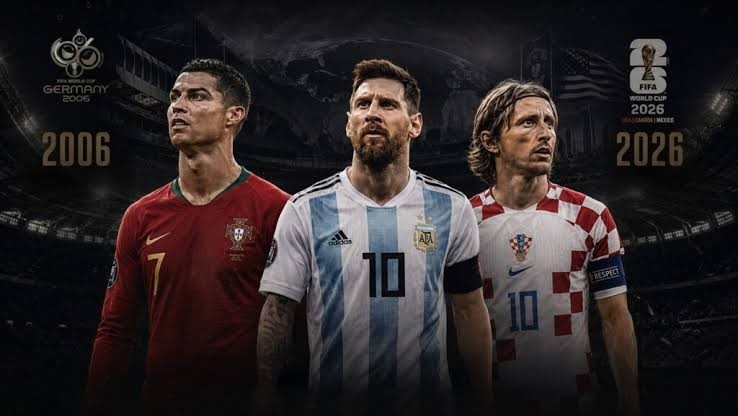

Discover how Lionel Messi, Cristiano Ronaldo, and Luka Modrić continue to dominate the FIFA World Cup 2026 despite their age. Explore the science, fitness, recovery, and discipline behind football’s longest-lasting legends.
URL Slug:messi-ronaldo-modric-defy-age-fifa-world-cup-2026
For decades, football followed a familiar script. Players reached their peak between the ages of 24 and 30 before gradually fading from the international stage. By the time they reached their mid-30s, retirement from the FIFA World Cup was usually inevitable.
The FIFA World Cup 2026 has rewritten that story.
Instead of watching a new generation completely take over, fans have witnessed three of football’s greatest icons—Lionel Messi, Cristiano Ronaldo, and Luka Modrić—continue to perform at the highest level. Their leadership, intelligence, and technical brilliance remain decisive despite approaching or surpassing the age traditionally considered impossible for elite football.
These legendary players are proving that age is no longer the biggest opponent in football. Modern sports science, advanced recovery techniques, improved nutrition, and extraordinary personal discipline have extended careers once thought impossible.
The FIFA World Cup 2026 may ultimately be remembered not only for thrilling matches but also for showing that greatness can survive well beyond traditional athletic limits.
A New Era of Football Longevity
One of the most remarkable trends of the FIFA World Cup 2026 has been the growing number of experienced players still competing at the highest level.
Years ago, seeing a 37- or 38-year-old footballer in the World Cup was unusual. Today, players approaching 40 are still making decisive contributions.
The tournament has highlighted a significant shift in professional football:
- More players over 35 are appearing in World Cup squads.
- Several veterans remain key starters instead of bench options.
- Clubs and national teams now invest heavily in extending player careers.
- Recovery has become just as important as training.
This transformation reflects how football has evolved both physically and scientifically.
Lionel Messi Continues to Rewrite History
At 39 years old, Lionel Messi continues to amaze football fans around the world during the FIFA World Cup 2026.
Many expected him to play a reduced role for Argentina.
Instead, Messi has once again become the heartbeat of the defending champions.
Throughout the tournament, he has demonstrated that football intelligence often outweighs physical speed.
Instead of constantly sprinting across the pitch, Messi carefully observes space, waits for the perfect moment, and then delivers game-changing passes or goals.
His performances include:
- Crucial knockout-stage goals
- Match-winning assists
- Outstanding leadership
- Record-breaking goal contributions
Messi has also continued adding to his extraordinary World Cup legacy, strengthening his place among the greatest players football has ever seen.
His performances prove that elite football is increasingly about decision-making, positioning, and efficiency rather than nonstop running.
Cristiano Ronaldo Refuses to Slow Down
If Messi represents football intelligence, Cristiano Ronaldo remains the perfect example of physical excellence.
Even at 41 years old, Ronaldo continues to compete against players nearly half his age.
His professionalism has become legendary.
Every aspect of his daily routine is carefully managed:
- Nutrition
- Strength training
- Recovery
- Sleep
- Flexibility
- Injury prevention
This relentless commitment has allowed Ronaldo to remain Portugal’s leader during the FIFA World Cup 2026.
He still possesses:
- Elite finishing ability
- Aerial dominance
- Leadership
- Mental toughness
- Winning mentality
Perhaps even more impressive is his consistency.
Very few footballers have remained relevant across six different World Cup generations.
Ronaldo has transformed himself multiple times during his career—from explosive winger to elite goal scorer—allowing him to stay competitive despite natural aging.
Luka Modrić Shows Why Midfield Intelligence Never Ages
While forwards often dominate headlines, Luka Modrić continues proving that world-class midfielders can remain influential well into their late 30s.
The Croatian captain still dictates tempo with remarkable calmness.
Rather than relying on explosive speed, Modrić controls matches through:
- Passing accuracy
- Vision
- Tactical awareness
- Ball retention
- Leadership
His ability to read the game several seconds ahead allows him to conserve energy while still dominating possession.
The FIFA World Cup 2026 has shown once again why Modrić remains one of football’s smartest players.
Sports Science Has Changed Everything
The biggest reason footballers now enjoy longer careers is modern sports science.
Twenty years ago, training focused primarily on endurance and physical intensity.
Today’s approach is far more personalized.
Elite players now receive customized programs based on:
- Age
- Injury history
- Muscle fatigue
- Sleep quality
- Heart rate
- Recovery levels
- Match workload
Coaches no longer expect players to simply train harder.
Instead, they train smarter.
Every session is carefully designed to maximize performance while minimizing injury risk.
Technology Is Helping Players Stay Younger
Football clubs now collect enormous amounts of performance data.
GPS tracking devices monitor:
- Sprint distance
- Acceleration
- Deceleration
- High-speed runs
- Workload
- Fatigue
Wearable technology also tracks:
- Heart rate
- Sleep quality
- Recovery
- Hydration
- Stress levels
Medical teams can identify early signs of overtraining before injuries occur.
Instead of reacting after an injury, clubs increasingly prevent injuries before they happen.
This technological revolution has become one of the biggest reasons players can extend their careers.
Recovery Is Now More Important Than Training
One of the biggest changes in elite football is the emphasis placed on recovery.
Modern players spend almost as much time recovering as they do training.
Recovery methods include:
- Ice baths
- Compression therapy
- Massage
- Physiotherapy
- Stretching
- Mobility exercises
- Personalized nutrition
- Sleep optimization
These routines help muscles repair more quickly and reduce fatigue between matches.
As a result, experienced players can remain competitive even during demanding tournaments like the FIFA World Cup 2026.
Better Nutrition Creates Better Careers
Elite footballers now treat nutrition as part of their profession.
Gone are the days when post-match celebrations regularly involved unhealthy eating and drinking.
Today’s stars carefully manage:
- Protein intake
- Hydration
- Carbohydrates
- Vitamins
- Recovery meals
- Anti-inflammatory foods
Cristiano Ronaldo has long been recognized for maintaining one of football’s strictest nutritional routines.
Many younger players have adopted similar habits, recognizing that proper nutrition directly affects longevity.
Medical Advances Are Extending Careers
Football medicine has progressed dramatically over the past two decades.
Injuries once considered career-ending are now often successfully treated.
Examples include:
- ACL reconstruction
- Achilles tendon rehabilitation
- Advanced physiotherapy
- Regenerative medicine
- Individual rehabilitation programs
Medical teams now monitor players continuously throughout recovery, helping them regain strength while minimizing the risk of re-injury.
These advances have transformed career expectations across professional football.
Experience Has Become a Competitive Advantage
Older players may lose some physical explosiveness.
However, they gain something equally valuable:
Experience.
Veteran footballers understand:
- Match rhythm
- Tactical positioning
- Pressure situations
- Leadership
- Decision-making
In knockout football, these qualities often become decisive.
Young players may possess greater speed, but experienced stars frequently make smarter decisions when matches are at their most intense.
This explains why managers continue trusting veterans during the FIFA World Cup 2026.
The Rise of Veteran Goalkeepers
One of the tournament’s biggest surprises came from Cape Verde goalkeeper Vozinha, who impressed the football world at 40 years old.
His performances against stronger opponents demonstrated that goalkeepers can remain competitive much longer than many outfield players.
Goalkeeping relies heavily on:
- Positioning
- Reflexes
- Reading the game
- Communication
- Leadership
These qualities often improve with experience.
Vozinha’s remarkable performances became one of the inspirational stories of the FIFA World Cup 2026.
Why Football Careers Are Getting Longer
Several factors now combine to extend elite careers.
1. Personalized Training
Every player follows a unique program.
2. Advanced Recovery
Recovery has become a science.
3. Better Nutrition
Professional dietary planning supports long-term performance.
4. Medical Innovation
Improved surgery and rehabilitation reduce career-ending injuries.
5. Data Analytics
Technology identifies fatigue before injuries occur.
6. Mental Conditioning
Sports psychologists help athletes remain focused throughout long careers.
7. Financial Incentives
Elite players have strong motivation to continue competing because of lucrative contracts, endorsements, and global commercial opportunities.
What This Means for the Future of Football
The success of Messi, Ronaldo, and Modrić could permanently change how football views aging.
Young players entering professional football today have access to:
- Better coaching
- Better nutrition
- Better recovery
- Better sports science
- Better injury prevention
As a result, careers lasting into the late 30s—and even early 40s—may become increasingly common.
The traditional football career timeline is rapidly changing.
Final Thoughts
The FIFA World Cup 2026 has become more than a showcase of emerging talent. It has also celebrated the extraordinary longevity of football’s greatest legends.
Lionel Messi continues to mesmerize with his vision and match-winning brilliance. Cristiano Ronaldo remains a symbol of relentless dedication and physical excellence. Luka Modrić demonstrates that intelligence and composure can dominate even against younger opponents.
Together, they have challenged long-held assumptions about aging in elite sport.
Backed by cutting-edge sports science, personalized training, disciplined lifestyles, and unmatched determination, these icons have extended their careers far beyond what previous generations thought possible.
Their success is not just inspiring today’s footballers—it is reshaping the future of the game. As technology, medicine, and performance science continue to evolve, the next generation may redefine football longevity even further.
One thing is certain: the FIFA World Cup 2026 will be remembered as the tournament where experience proved every bit as valuable as youth, and where football’s greatest legends showed that greatness does not fade simply because the calendar moves forward.
Frequently Asked Questions (FAQs)
How old are Messi, Ronaldo, and Modrić during the FIFA World Cup 2026?
Lionel Messi is 39, Cristiano Ronaldo is 41, and Luka Modrić is 40 during the FIFA World Cup 2026, making them among the tournament’s oldest elite players.
Why are football players competing longer today?
Advances in sports science, personalized training, injury prevention, nutrition, recovery methods, and data analytics have significantly extended professional football careers.
What makes Messi, Ronaldo, and Modrić successful at their age?
Their success comes from exceptional discipline, tactical intelligence, technical skill, leadership, elite fitness, and years of experience competing at the highest level.